

Farouk Ibrahim: Seeking the Sweetness of Life
BY ARTHUR DEBSI
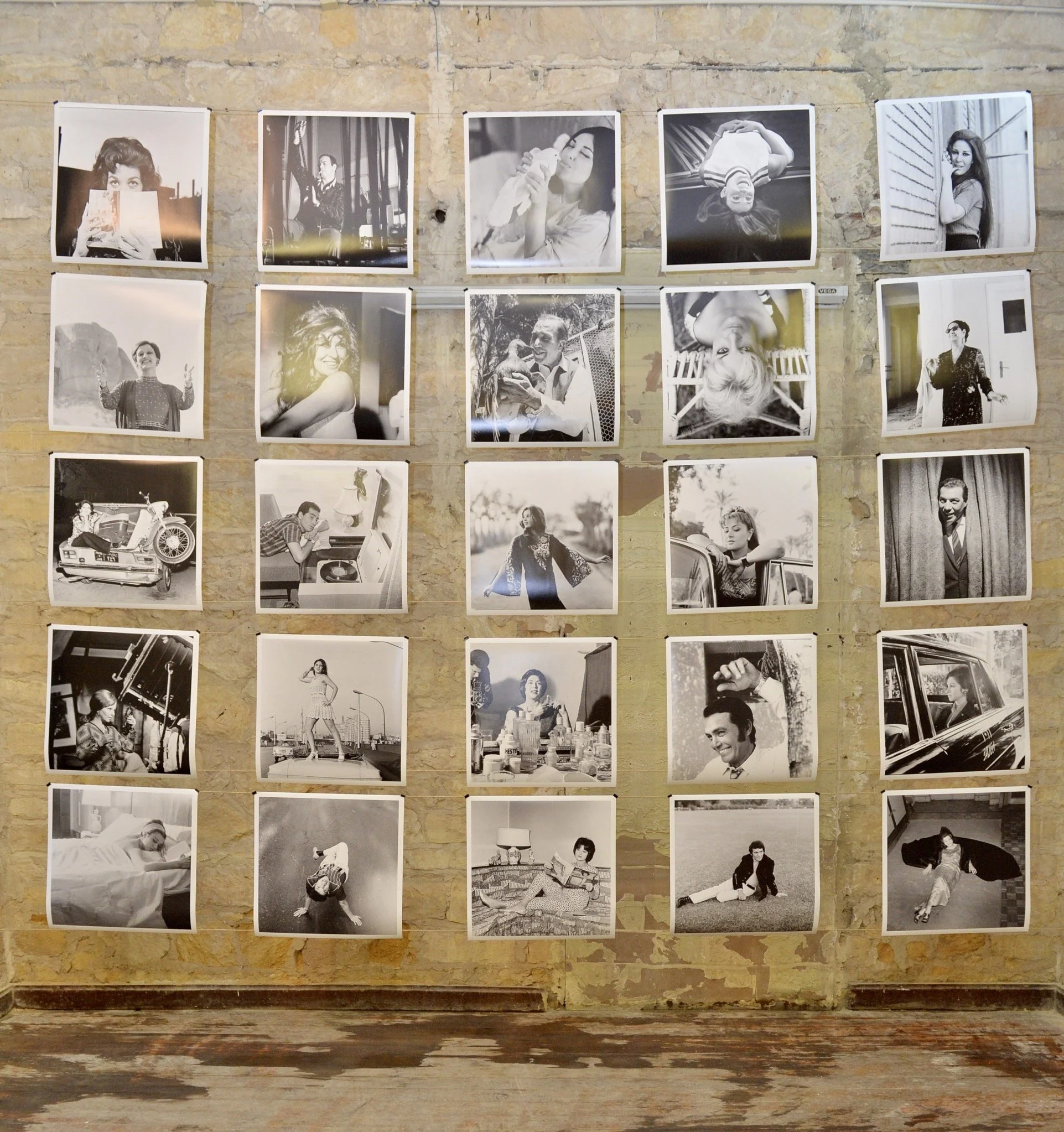
“Farouk Ibrahim: The Legend's unboxing" exhibition, Access Art Space, Cairo, February 2023.
From the Coup d’État by the Free Officers against King Farouk in 1952, to the euphoric time of the revolution in Tahrir Square in 2011, these photos taken by the Egyptian photographer Farouk Ibrahim fall somewhere between photojournalism and art. These images are immensely recognizable and have been circulating worldwide as valuable archives. And even if a tribute exhibition ‘Farouk Ibrahim: The Legend Unboxing’ was held at Cairo Photo Week in February 2023, a lot about the photographer and his work is yet to be discovered.
Born in Cairo in 1939, Ibrahim came from a modest family and took many jobs to make ends meet. At some point, he worked as a darkroom assistant for a few months at the studio of Armenian photographer Carlo Zachary in 1951. With an interest and talent for photography, he became the studio manager and then collaborated with several local magazines, such as the nationalist newspaper Al-Misri established by the Wafd party. He then joined as a photographer to the Nasserist magazine Bina al-Watan, and Al-Gomhuria. He eventually worked as a photojournalist at Akhbar al-Yom newspaper in 1961 until he passed away in 2011. With a boundless passion, his photographs recall unforgettable times with iconic figures, who made Egypt a special place in the history of the Arab world.
In the 20th century, the city of Cairo was a vibrant hub for arts and culture, with highly developed music and cinema industries. Additionally, the country played a central role in the politics of the region, by being the driving force of Pan-Arabism ideology. Ibrahim consequently found himself at the heart of that vivid environment, experiencing significant political changes, which occurred during three successive presidential tenures: Gamal Abdel Nasser, Anwar Al-Sadat and Hosni Mubarak. In parallel, he witnessed the effervescence of the cultural and artistic scenes, to which an endless list of people contributed, including authors Taha Hussein and Naguib Mahfouz, singers Farid Al-Atrash, Um Kulthum, and Abdel Halim Hafez, actors and dancers Souad Hosny, Samir Ghanem, Samia Gamal, Nagwa Fouad, and Faten Hamama. All of them were captured by the lens of Ibrahim, who had progressively gained their trust. He followed Um Kulthum on all her international trips, including her famous concert at the Olympia in Paris in 1967; and later, appointed the official photographer of Al-Sadat and Mubarak.
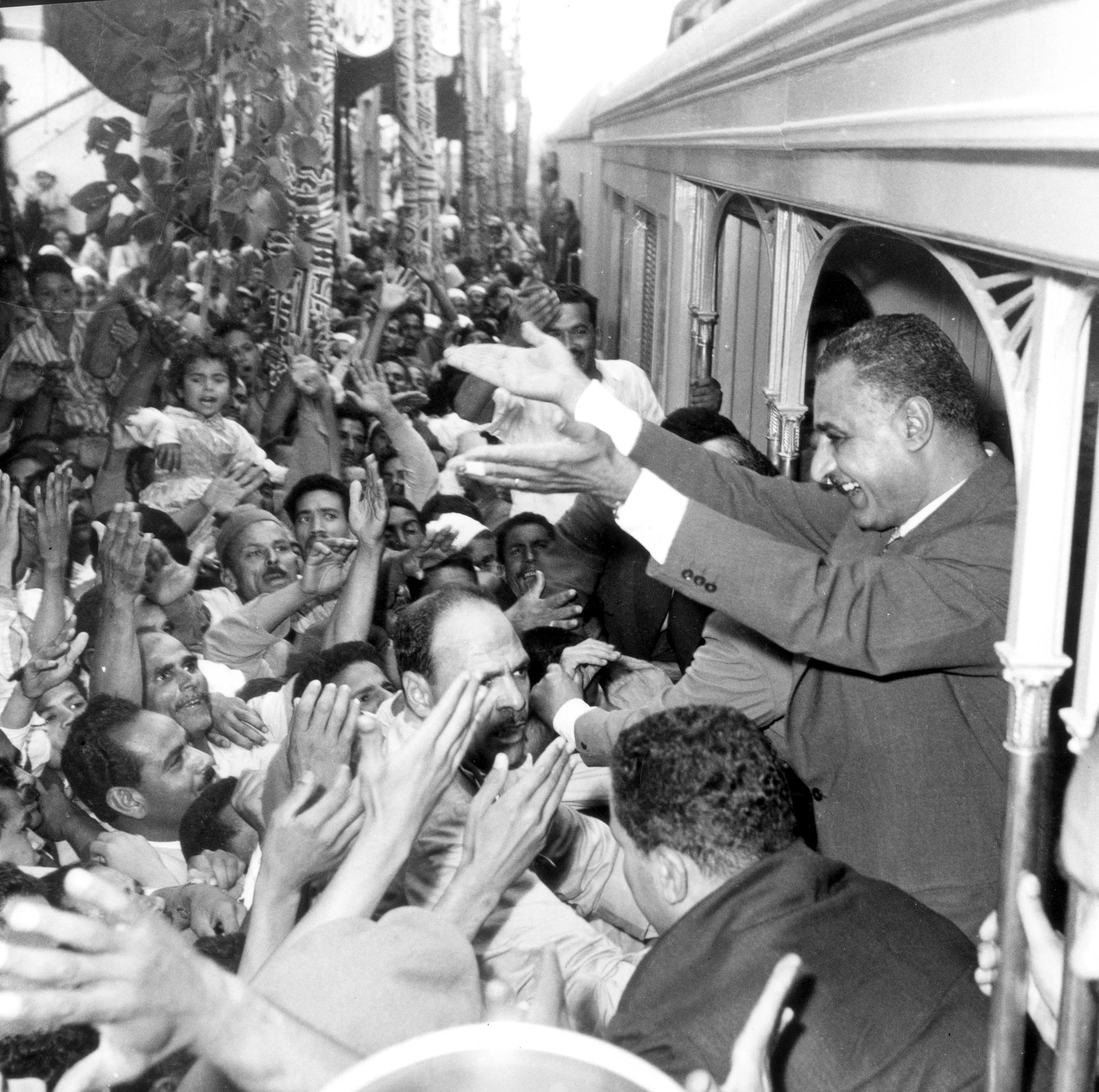
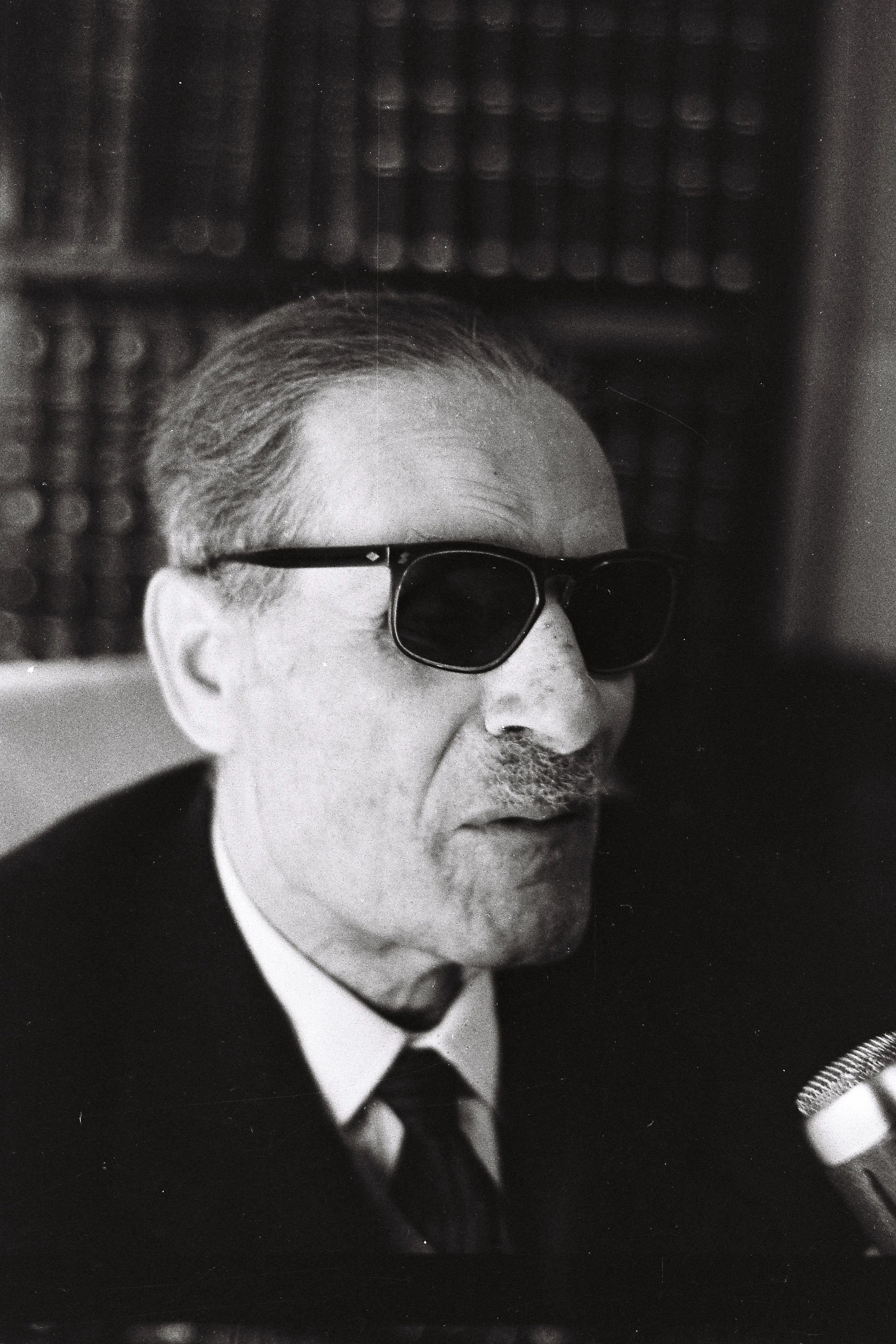
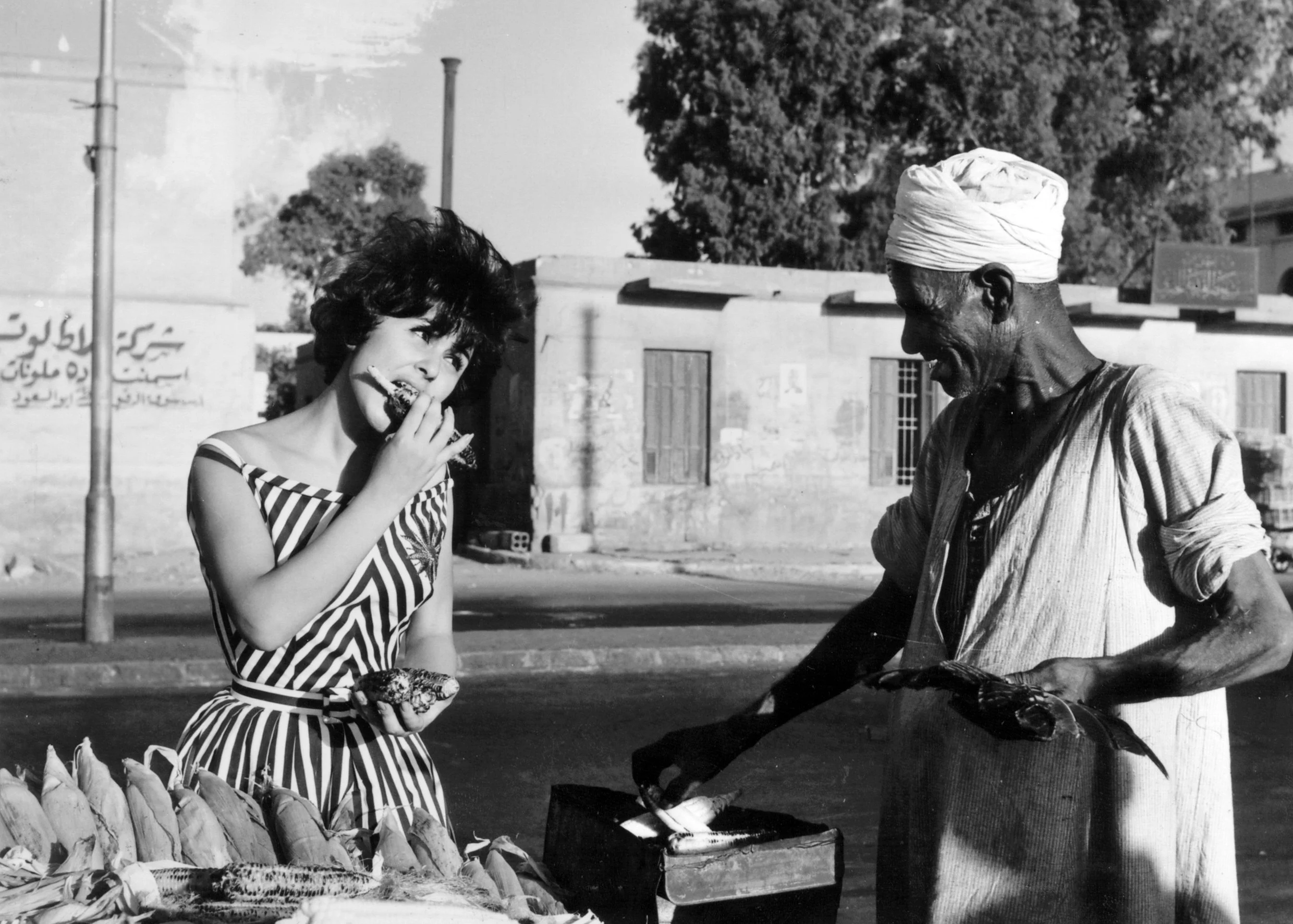
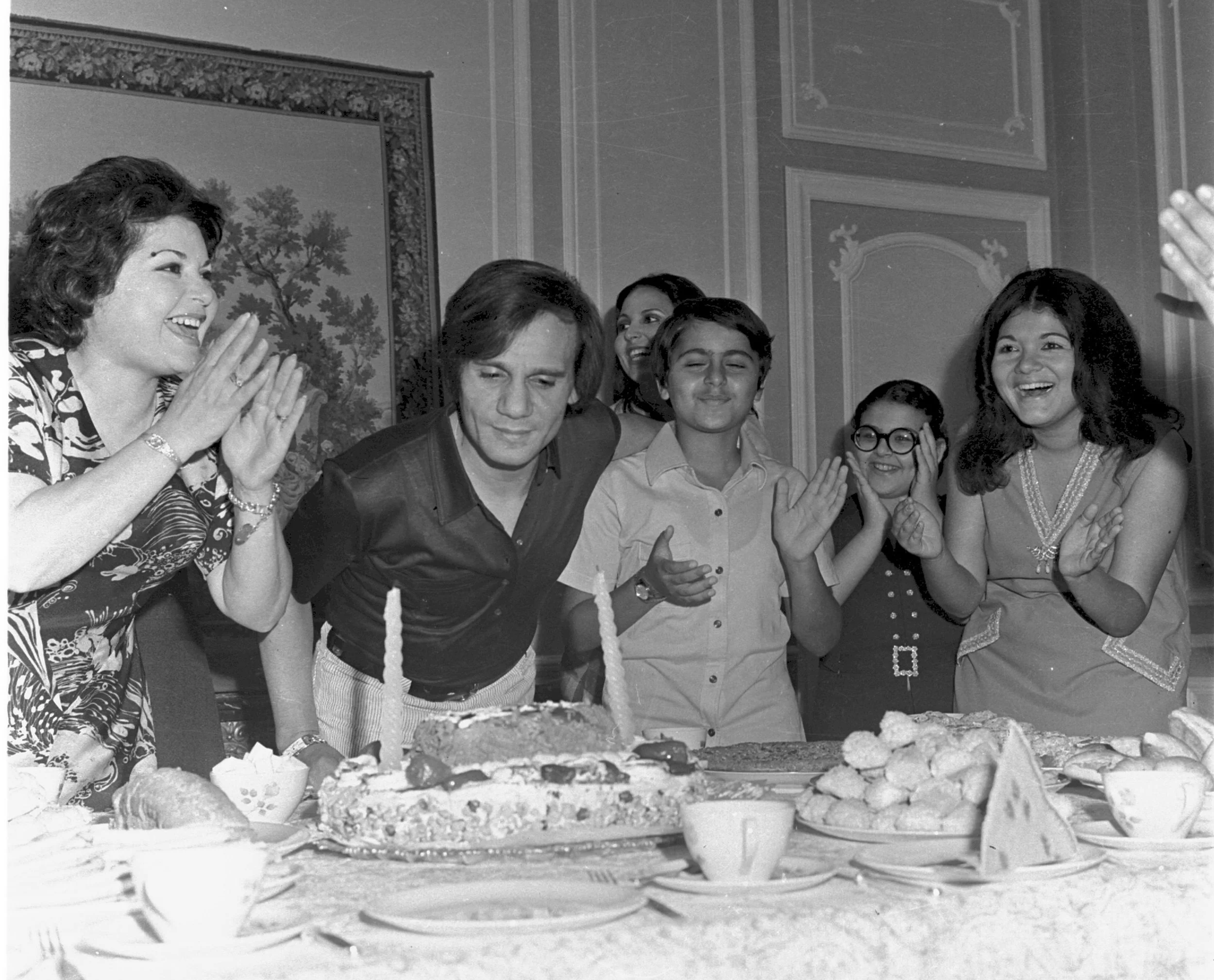
Mostly from the Egyptian working-class, these actors, intellectuals and politicians embodied the ability of unprivileged people to access fame whilst playing a social role towards their communities. In the post-independence context, they formed a sense of Arab pride, through creative expression and socio-political engagement. Taha Hussein, who came from a modest background, was the first Arab writer to be nominated for the Nobel Prize of Literature in 1969. The talent was subject to strong popular admiration, bordering on idolatry (as seen in the image of a human tide pressing towards Gamal Abdel Nasser upon his arrival at the Alexandria train station in 1958). Ibrahim did not always choose to photograph his subjects in official circumstances and formal settings. With his playful nature and energy, he largely preferred to portray them in their daily lives and out of the spotlight. In her portrait, Souad Hosny, dubbed ‘Cinderella’, is seen eating grilled corn in the middle of a countryside road, far from the cinema screens, which made her an emblematic Arab actress. Through his commercial photography, Ibrahim artistically translates the sincere relationship between himself and his subjects; he often used point-and-shoot cameras not to intimidate them. He liked intimate and inclusive scenes, such as Abdel Halim Hafez’s birthday party, for whom he was the personal photographer between 1952 and 1977.
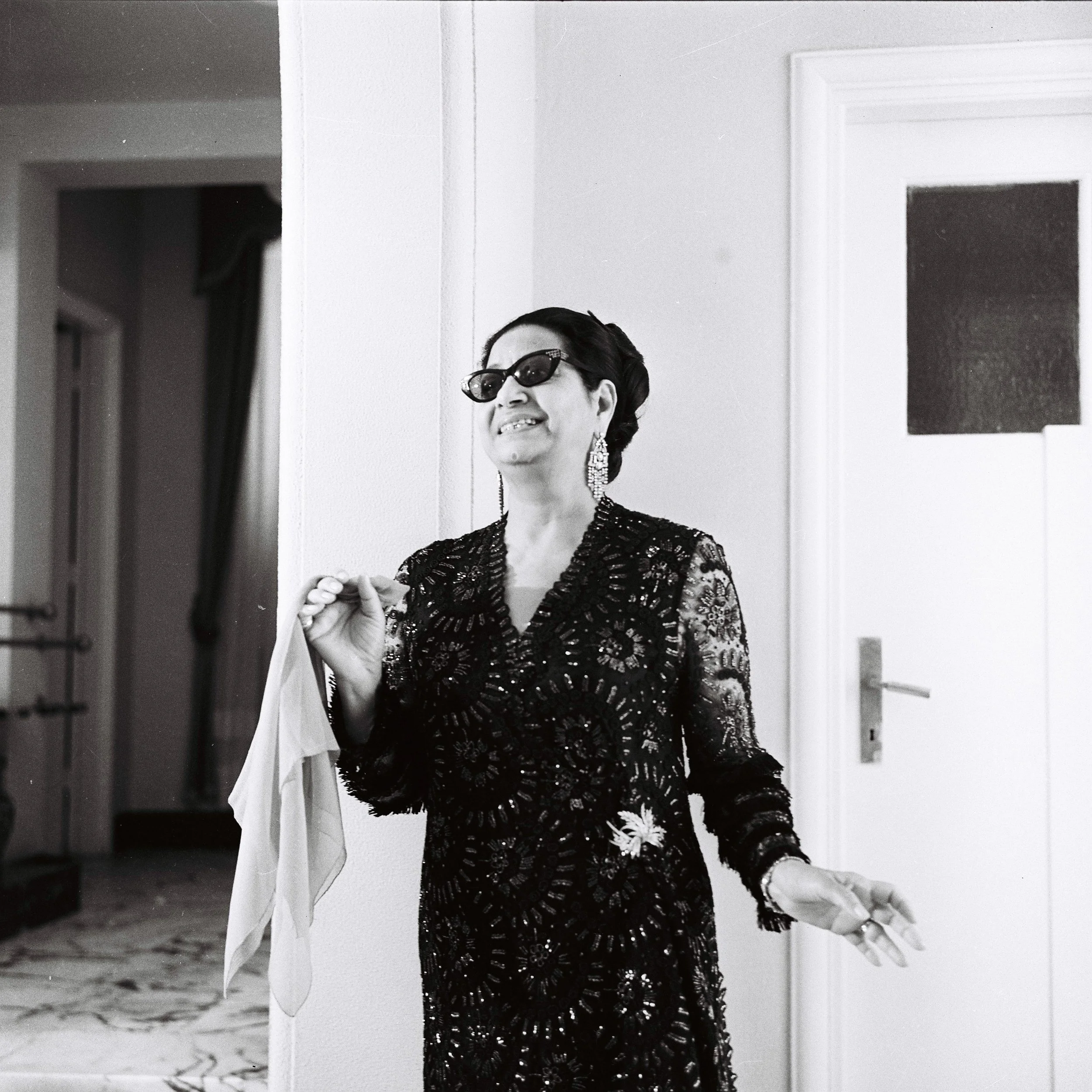
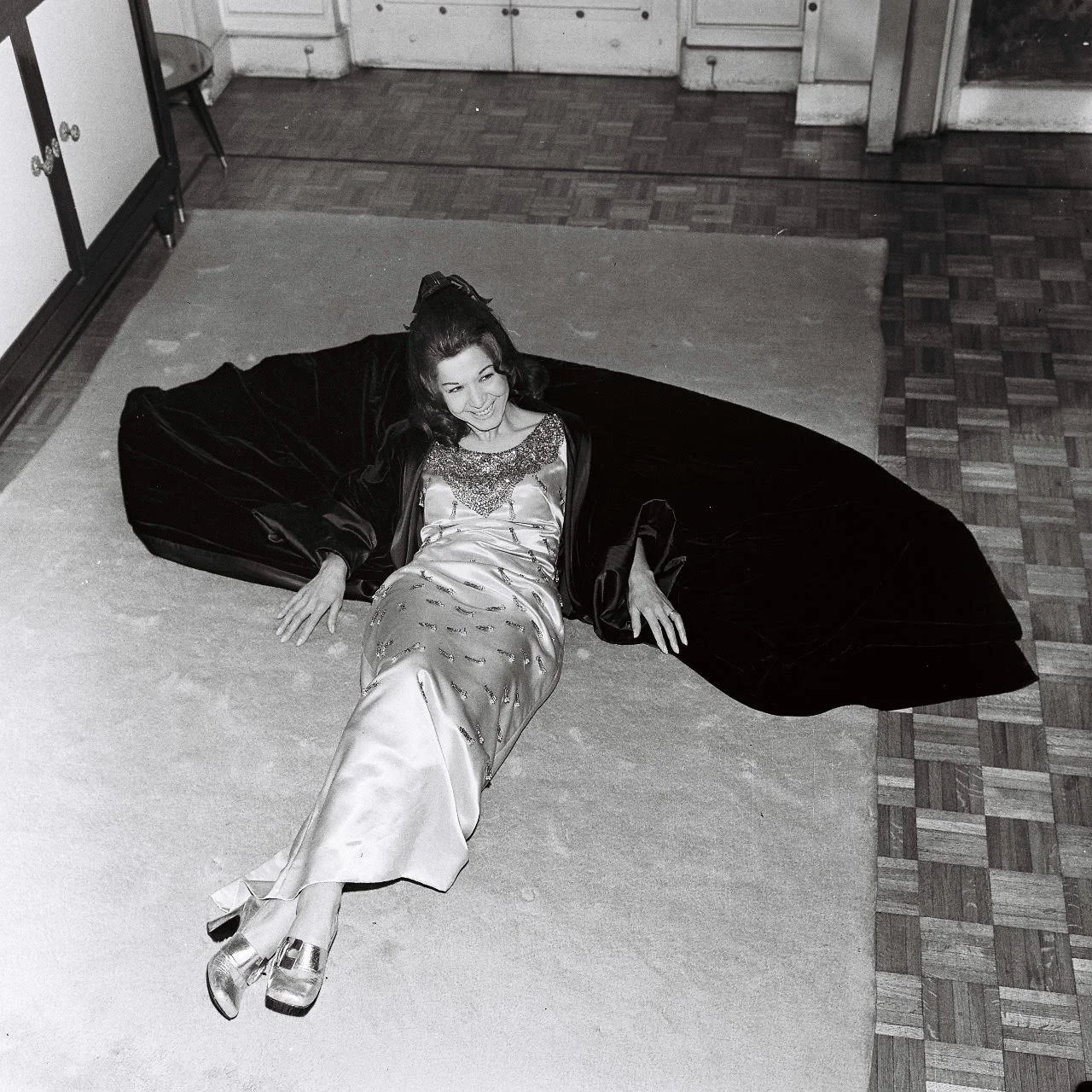
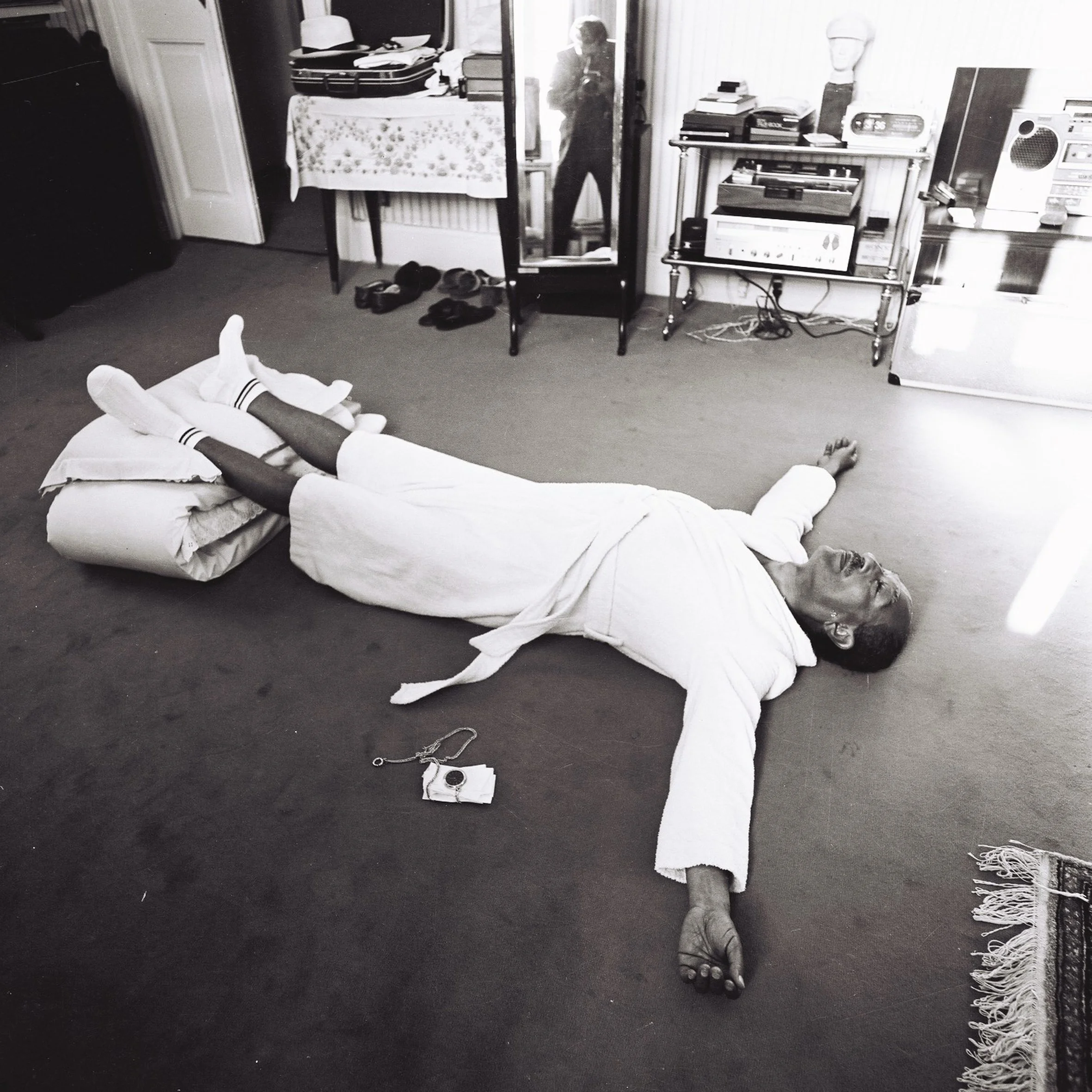
Ibrahim frequented circles of celebrities and was able to extract different facets of their personalities and sometimes unveiled unexpected images. There is no doubt that he felt comfortable enough to convince them to loosen up just for a picture in more casual situations. The image of Um Kulthum is one of a Grand Lady (El-Sett), which could look intimidating and even severe. Wearing a glamorous dress and holding her famous muslin scarf, she was about to leave her house and go on stage, when Ibrahim asked her to quickly pose, which she did joyfully. Ibrahim’s images make the fleetingness of time regretful, and their essence stems from a combination of spontaneity, childlike spirit, and a touch of absurdity. Dancer Samia Gamal, who performed on international stages, sat on the floor of her home in an evening dress and elegant heels after it was repaired from flood damage. The subjects’ smiles show the joy of playing into Ibrahim’s game, who was constantly chasing these amusing slices-of-life. Through close-ups and funny poses, the photographs also present a humbler perspective on his subjects, as if Ibrahim intended to erase social borders and challenge these mythical figures. These icons become mortal and do not appear to be disconnected from the reality of their contemporaries. He took a picture of President Anwar Al-Sadat, who used to rest his legs on a pillow after his daily morning walk, doing just that.
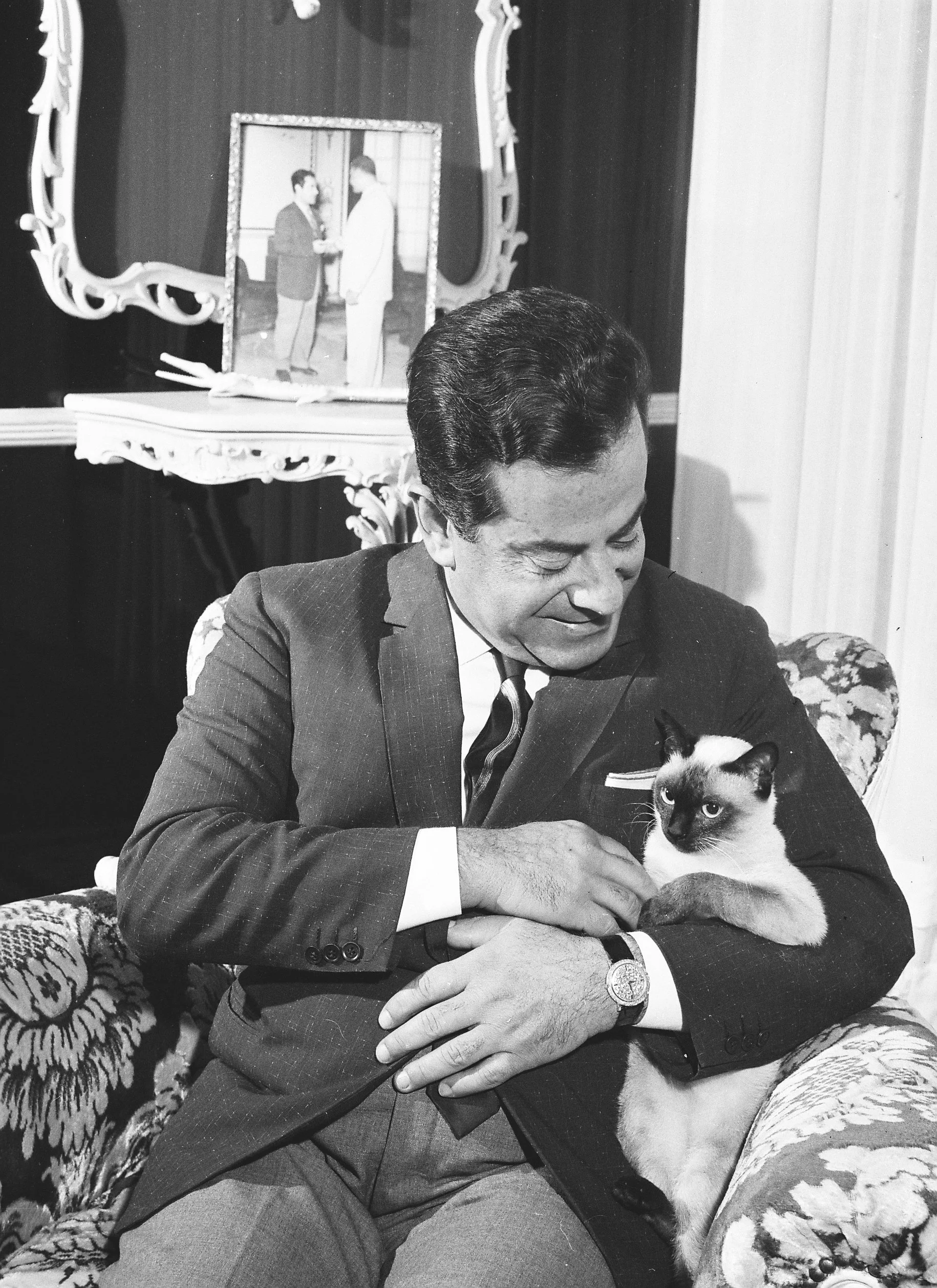
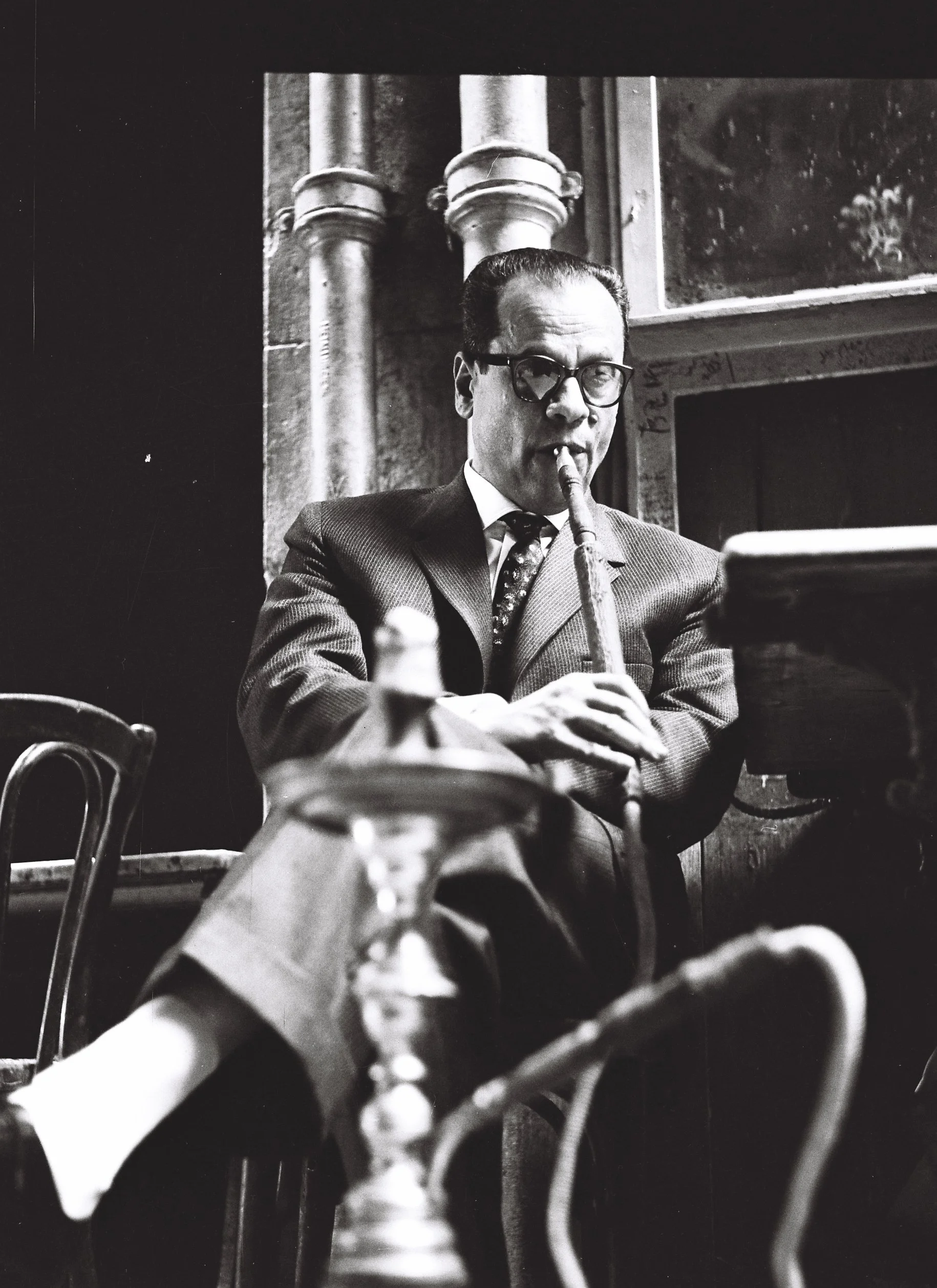
Ibrahim always said: ‘I never tasted the sweetness of life before photography’. It seems that his journey effectively resembles the one of the people that he photographed throughout his 59-year career: he escaped extreme poverty and made himself the eminent Egyptian photographer of his time. Today, more than 600,000 photographs have been thoroughly collected and archived by the estate of Farouk Ibrahim, determined to preserve this tremendous legacy. These images have constituted a true testimony not only to the social, political and cultural history of Egypt, but also the whole of the Arab region. The photographer created a visual culture, by capturing unique moments, which are still alive in the Arab collective memory.
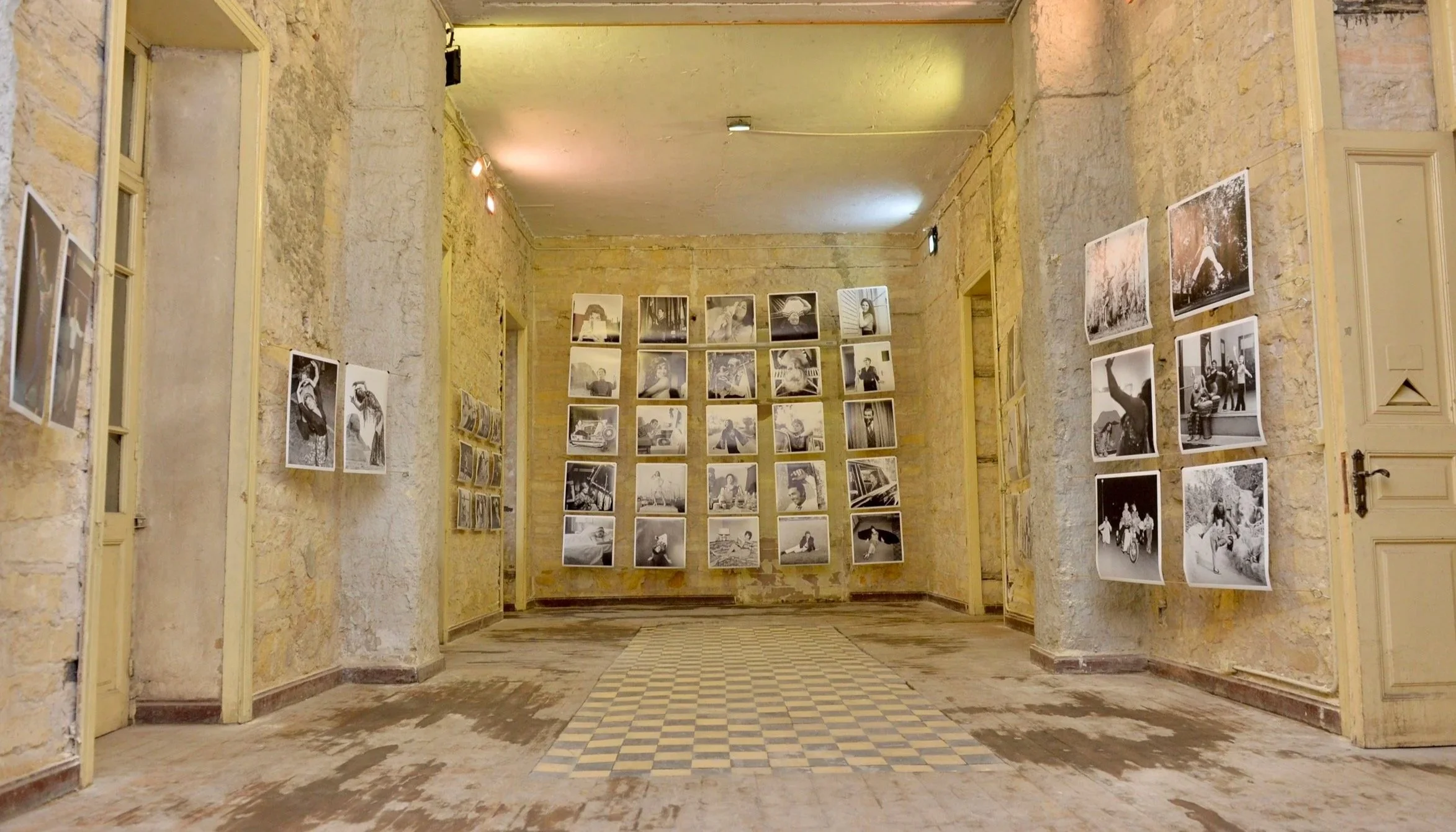
“Farouk Ibrahim: The Legend's unboxing" exhibition, Access Art Space, Cairo, February 2023.
All images courtesy of the photographer's estate and Karim Ibrahim.
Arthur Debsi (@arthurdebsi) is an art researcher and writer specialist of Arab modernities, focusing on the question of cultural identity, and transnational art movements in the 20th century colonial and postcolonial context. Graduated in Art History at Paris I - Panthéon Sorbonne, he gained experience in several institutions in the Arab world, such as Christie's, Dubai, and the Sursock Museum, Beirut. He worked as a researcher and writer at the Ramzi and Saeda Dalloul Art Foundation, where he especially contributed to the launch of the online collection (2019-2022). He is currently working as a researcher and curator at Mathaf: Arab Museum of Modern Art, Doha, working on publication and exhibition projects. He co-curated the museum anniversary exhibitions “Resolutions: Celebrating Mathaf 15th Anniversary" (2025) and "Resolutions: Evolving Realities" (2026). Debsi is one of the authors who has written for the following publications: the collection catalogue of UNESCO (2020), exhibition catalogues “Monaco and Alexandria. The Great Detour.” (2021), “Arab Presences. Modern Art and Decolonisation: Paris 1908-1988” (2024), and articles (Diptyk Magazine, Vogue Arabia, ArtAsiaPacific). Debsi is currently working on the reedition of the book “In the Search of An Arab Modernity “ (1996) by Silvia Naef.